Research Product

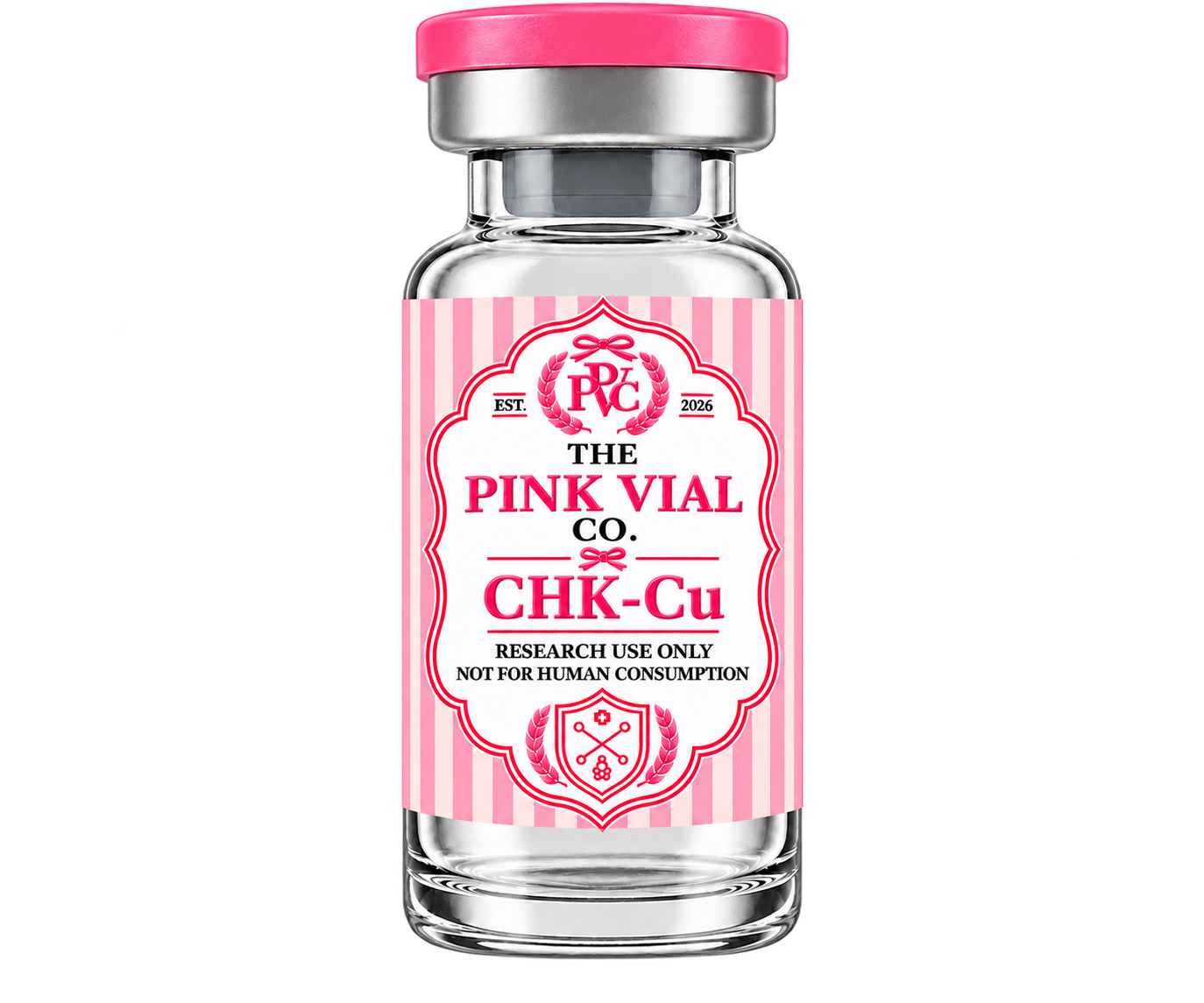
GHK-Cu

Research GradeDocumentation Ready
Research Grade · Third-Party Verified
CAS: CAS: 49557-75-7 C14H24N6O4 (peptide) + Cu ≥99% Pure
Price range: $39.99 through $69.99
For Research Use Only. Not intended for human or veterinary use. Read our full Research Disclaimer.
Fast processingOrders prepared promptly
Third-party documentationLot-specific COA when published
Research gradeLaboratory-use presentation
Category:

Description

This listing supplies GHK-Cu — the copper(II) complex of the tripeptide glycyl-L-histidyl-L-lysine — as a lyophilized reference material for in-vitro and preclinical laboratory work. Unlike a metal-free peptide, GHK-Cu is a coordinated metallopeptide: the histidine imidazole nitrogen, the terminal glycine amine, and adjacent backbone atoms form a chelation site that holds a single copper(II) ion in a stable but exchangeable configuration. That bound copper gives the solid its characteristic blue tint and defines much of the compound’s chemistry, so laboratories treat it as a copper complex rather than a simple linear tripeptide when planning identity checks, solvent selection, and storage.

The material is intended for researchers characterizing copper-peptide behavior on the bench. It is used as an isolated standalone compound and, in some catalogs, as the copper-peptide component of multi-sequence research blends where matrix-model interactions are studied under controlled conditions. All descriptions below concern the research substance itself — its documented study history, its analytical fingerprint, and standard handling of freeze-dried peptide reference material — and are not statements about outcomes in humans or animals.
Additional information

Select Strength

50mg, 100mg

Scientific / technical description

What Has Been Studied
GHK was first isolated from human plasma in the 1970s, and its reported age-related change in biological fluids helped establish it as a recurring subject in matrix-biology and copper-chemistry research. The evidence base is preclinical and in-vitro; the summaries below describe observations in laboratory models, not effects in people, and remain preliminary and ongoing rather than settled.

Copper-coordination chemistry: physical studies have quantified copper-binding affinity, complex stability, and redox behavior, and have compared the GHK chelation motif to copper coordination in serum albumin.
Copper-transport hypotheses: preclinical work has explored whether GHK acts as a carrier that shuttles copper toward copper-dependent enzymes and copper-binding proteins under experimental conditions.
Cell-culture gene expression: fibroblast and skin-model systems have been used to examine concentration-dependent shifts in extracellular-matrix and antioxidant-response gene expression in vitro.
Tissue-model and formulation studies: explant and animal models have historically probed tissue-repair signaling, while analytical work has characterized how the copper complex behaves across buffer systems used in benchtop assays.

Analytical Characterization
For reproducible work, identity and purity of a copper-peptide standard matter as much as the sequence. GHK-Cu is typically assessed by reversed-phase HPLC to quantify peptide purity, with mass spectrometry used to confirm molecular identity and the expected copper-complex mass. Because the coordinated copper ion alters chromatographic retention and ionization relative to the metal-free peptide, analytical methods for GHK-Cu are usually documented separately, and reviewers should confirm that a reported purity reflects the copper complex rather than the apo-peptide.

A batch-specific certificate of analysis (COA) generally reports the HPLC purity percentage and the mass-spectrometry identity confirmation, and may include water content or residual-solvent data for the lyophilized powder. Because purity, counterion, and copper stoichiometry can vary between manufacturing lots, laboratories are encouraged to review the lot-specific COA rather than a generic specification, and to retain it alongside experimental records to support traceability and reproducibility.

Laboratory Handling
The following describes conventional handling of lyophilized research peptides and is not instruction for human or animal use. Sealed GHK-Cu powder is kept protected from light, humidity, and heat. Because the complex carries a redox-active copper ion, exposure to light and oxidizing conditions is minimized, and solvent choice is documented per protocol since certain buffer components can interact with the copper center. Reconstituted and working solutions are prepared fresh where possible and handled under the temperature conditions shown in the storage specifications on this page.

Important Research Notice

This product is sold strictly for research and laboratory use. It is not intended for human or veterinary administration, diagnosis, treatment, cure, mitigation, prevention of disease, or incorporation into products intended for human or animal consumption.

Purchasers are responsible for lawful acquisition, storage, handling, transportation, and use, including compliance with applicable federal, state, local, institutional, and laboratory requirements.

Frequently Asked Questions

What is this product?

This listing is for a research material offered for lawful laboratory and analytical use only. Review the product-specific technical information and documentation above before purchasing.

How is product documentation provided?

Where available, a lot-specific Certificate of Analysis is linked directly from this product page. Documentation is for research traceability and does not constitute FDA approval or authorization for human or veterinary use.

Is this product intended for human or veterinary use?

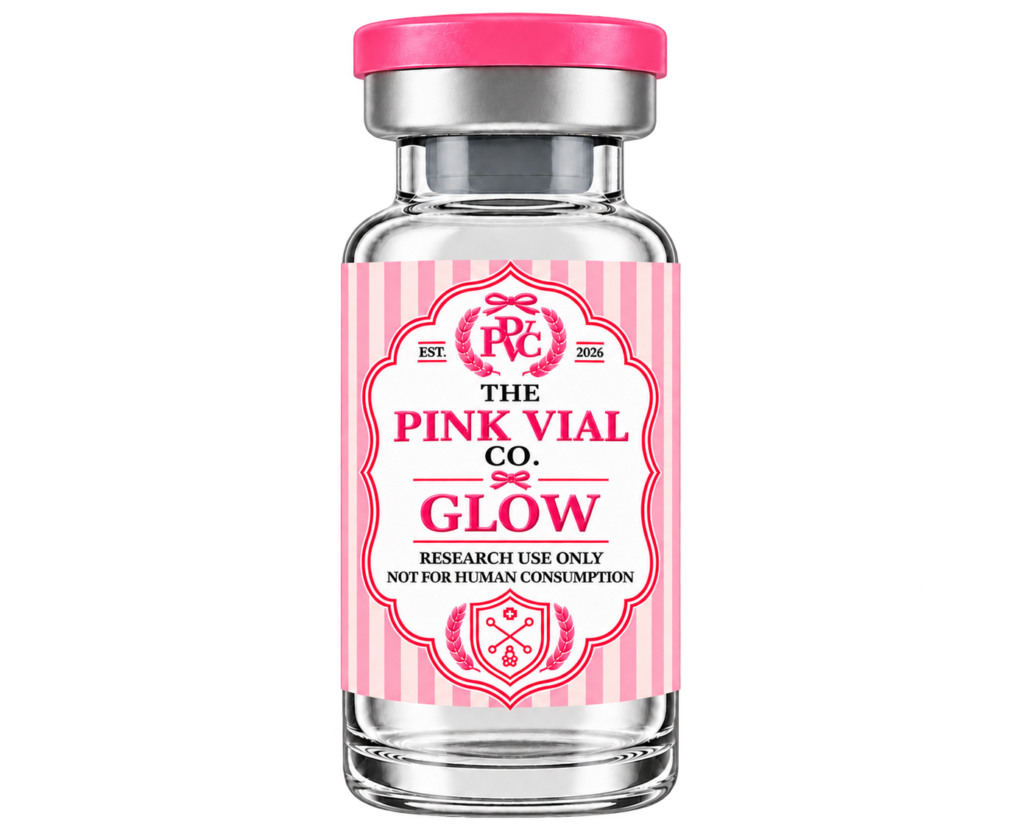
No. Products sold by The Pink Vial Co. are intended strictly for research, laboratory, analytical, academic, or scientific purposes and are not intended for administration to humans or animals.

Where can I find the research disclaimer?

The full site research disclaimer is provided in the footer and on the dedicated Research Disclaimer page.

Related products